


Project RENEW
We are working for you in your neighborhood.
Project RENEW™ is Little Rock Water Reclamation Authority’s multiyear, citywide capital improvement project to renew the aging infrastructure of our sewer system. Our priority is to protect your health and quality of life. Project RENEW is about safeguarding your right to quality water, quality pipelines and a great quality of life. Sewer lines have a finite life span. They don’t last forever and eventually have to be repaired or replaced. That is why Little Rock Water Reclamation Authority (LRWRA) has proactively implemented Project RENEW to improve the reliability of the sewer service line infrastructure. During this multi-year project, default pipelines throughout the entire City of Little Rock will be replaced. This will ensure that citizens have access to Quality Water through Quality Pipelines, thereby securing a Quality Life.


PROJECT RENEW (COMPLETED)
We are working for you in your neighborhood.
Project RENEW™ is Little Rock Water Reclamation Authority’s multiyear, citywide capital improvement project to renew the aging infrastructure of our sewer system.
You can’t live a day without reliable sewer lines. Your quality of life would be greatly impacted by a lack of reliable sewer services. The city’s sewer service lines are more than 70 years old. As a sewer line ages it may deteriorate past the point where it can structurally support the loads imposed on it. This can lead to a line collapse, which may disrupt sewer services for residents and businesses. Residents have a right to a reliable system, and RENEWing the sewer service lines protects that reliability. Quality pipelines keep storm and ground water out of sewer service lines, reduce backups into homes during rain events, and reduce overflow into streets and private yards.
Which sewer pipe rehabilitation method is being used for Project RENEW?
Pipe Bursting is a method of pipe rehabilitation. A new plastic pipe of equal or larger diameter is inserted into an existing pipeline by bursting open the existing pipe and pulling or pushing the new pipe into the old pipe. The new pipe is simultaneously inserted into an enlarged hole created by the expander. This reduces the length of time it takes to complete the project and causes less disruption in customers’ wastewater services.
What can I expect during Project RENEW?
There will be additional construction traffic and some noise. Also expect minor traffic delays in getting around actual personal property. Heller Construction Inc. is the contractor for Project RENEW. They have a long history of working with Little Rock Water Reclamation Authority and an excellent track record of working with and satisfying property owners.
Will LRWRA need access to my property to complete the project? If so, who will pay for the restorative services?
Not all residential property will be affected by the renewal. If the contractor has to access a resident’s property, all restoration to the property will be done with materials equal to what was damaged. Contractors provide a maintenance bond for one year after completion of the work. LRWRA will maintain an onsite inspector while the contractor is working on the project.
- Seal the sewer system to ALLEVIATE rainwater and ground water from infiltrating the pipelines.
- INCREASE THE SIZE of sewer lines to allow reclaimed water to flow more effectively from homes to a treatment facilitiy, which will mitigate sewer overflows into the environment.
- Provide Little Rock residents with a RELIABLE SEWER SYSTEM for years to come.
- Provide an opportunity for qualified residential customers whose lines have been identified as defective through SEWER INTEGRITY TESTING.
For more information on Project Renew, call 501.688.1490
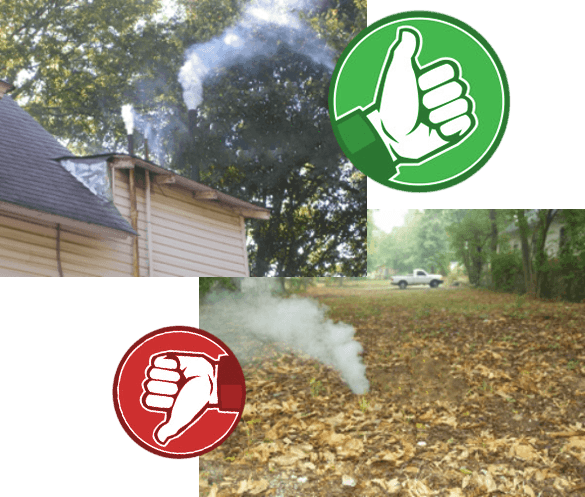
Little Rock Water Reclamation Authority (LRWRA) conducts smoke testing during capital projects in to determine if there is Inflow and Infiltration (I&I) on existing mains. This is a large scale endeavor covering multiple sewer lines and the associated service lines. LRWRA does NOT conduct smoke testing on individual Property Owners sewer service lines. Smoke testing can help locate improper connections to the system and areas where unwanted water is entering the system.
Sewer Integrity Testing consists of blowing a harmless colored vapor into the sanitary manholes and observing the points where the smoke exits. The smoke is expected to exit from manholes, the sewer stack at the top of your house, catch basins and downspouts. The smoke should not enter the home if it is properly plumbed and the drain traps contain water.
What does Sewer Integrity Testing look like and what can be expected during the process?
An LRWRA contractor will issue notices 24 – 48 hours before testing to give you an opportunity to pour water in sink drains, tubs and toilets to fill the traps (especially in unused areas of a home such as a guest bath.) The contractor will also be marking and taking photographs in the work areas. Some sewer lines and manholes may be located on your property. Crews will need to access the manholes but will NOT need to enter your home.
Smoke will NOT enter your home or business unless you have substandard plumbing or dried up drain traps.
How does Sewer Integrity Testing work?
- A blower is placed on a manhole.
- A smoke candle is lit and placed in the blower.
- Smoke seeps into lines and out of the ground through cracks (bad) indicating substandard lines and through roof vent pipes (good). Testing in each area will last for several hours.
When will work begin?
Door hanger notices will be distributed to homes 24 – 48 hours in advance of work by the contractor. The fire department will also be notified of all areas where testing will be occurring.
Why is the work needed?
Little Rock Wastewater has a Capital Improvement Project, called Project RENEW which is aggressively addressing the need to seal the sewer system to keep ground and rain water out. The information gained from testing will be used to improve the sewer services in your area.
If smoke enters my home or business what should I do?
Call us first. This could be an indication of faulty plumbing or dry traps. If smoke can enter through faulty plumbing, the potential for sewer gases to enter also exists.